Why we start with soil, not with seeds
Most conversations about vegetables start with the seed. Ours start with the ground the seed goes into. A seed is a small packet of potential and the soil decides how much of that potential it gets to use. Put a good seed in poor ground and you get a plant that survives. Put it in ground that has been looked after and you get a plant that thrives.
That is not a philosophy we arrived at in a classroom. Between the two of us we have around 30 years of farming experience, and the lesson that keeps repeating is that the seasons you struggle through are usually the ones where the soil was not ready. The years that go well are the ones where the ground did the work for you.
What we mean by healthy soil
Healthy soil is not just dirt that has been dug. It is alive. It holds water without staying wet, it smells of something growing rather than something stale, it has structure so roots can move through it, and it is full of the small life that breaks down organic matter and makes it available to plants.
You can tell a lot with your hands. Squeeze a handful: good soil holds together and then crumbles when you press it, rather than setting like a brick or falling apart like dust. Push a fork in and it should go in with some resistance and come out with life on it. Look at the colour — dark, even, damp but not sour.
None of that is a laboratory test. It is the daily reading a grower takes, and after enough seasons it is more useful than a number on a piece of paper.
What we do, in the order we do it
The work is not complicated to describe. It is slow to do.
First, we feed the ground rather than the plant. Organic matter goes back in — the parts of a crop that do not go to market, the material that has finished its job above ground. Soil that is fed keeps producing; soil that is only harvested from gets tired.
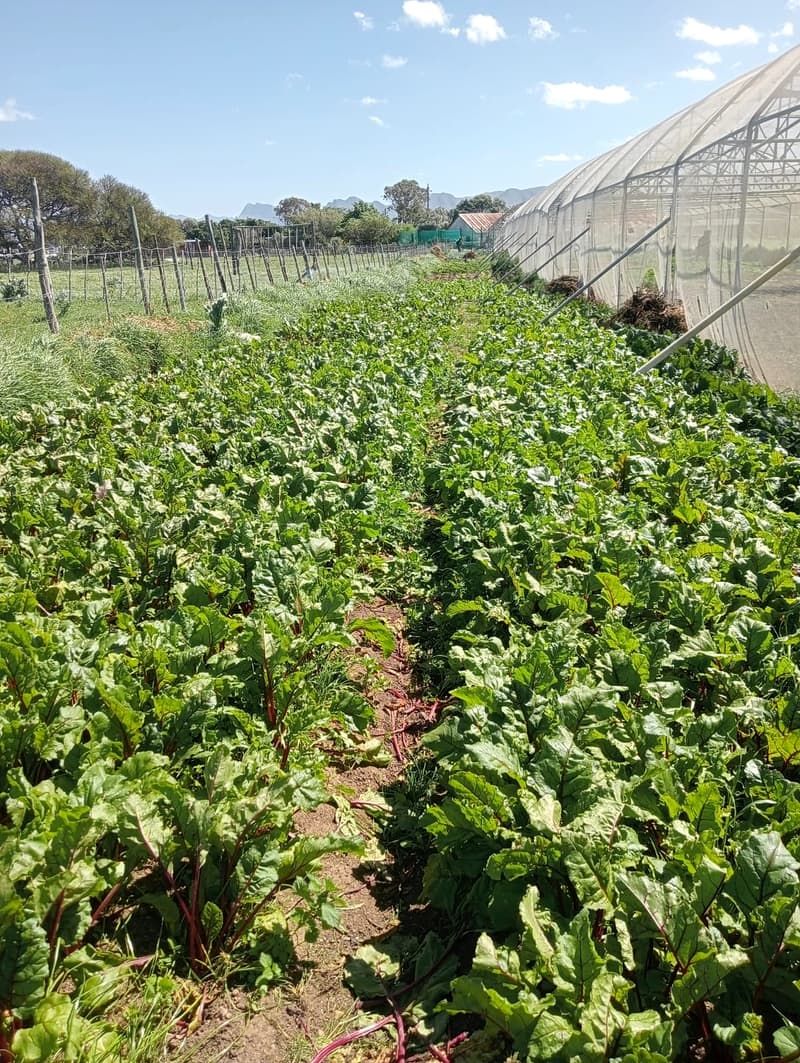
Second, we keep the soil covered, always. This is the rule that makes the rest of it work. We mulch, and then we mulch again. Mulch holds moisture, keeps the surface cool, feeds the earthworms and keeps the microorganisms working. Bare soil is always unhealthy soil: it bakes, it erodes, and the life in it dies. We would rather have weeds on a bed than sun on bare earth.
Third, we do not rest the ground. Most growing advice tells you to give beds a break between crops. We do the opposite, and it is the part of our method people find hardest to accept. The same soil is cropped again and again, because a small business with no spare hectares cannot afford empty beds. What protects it is the mulch and the rotation, not a rest.
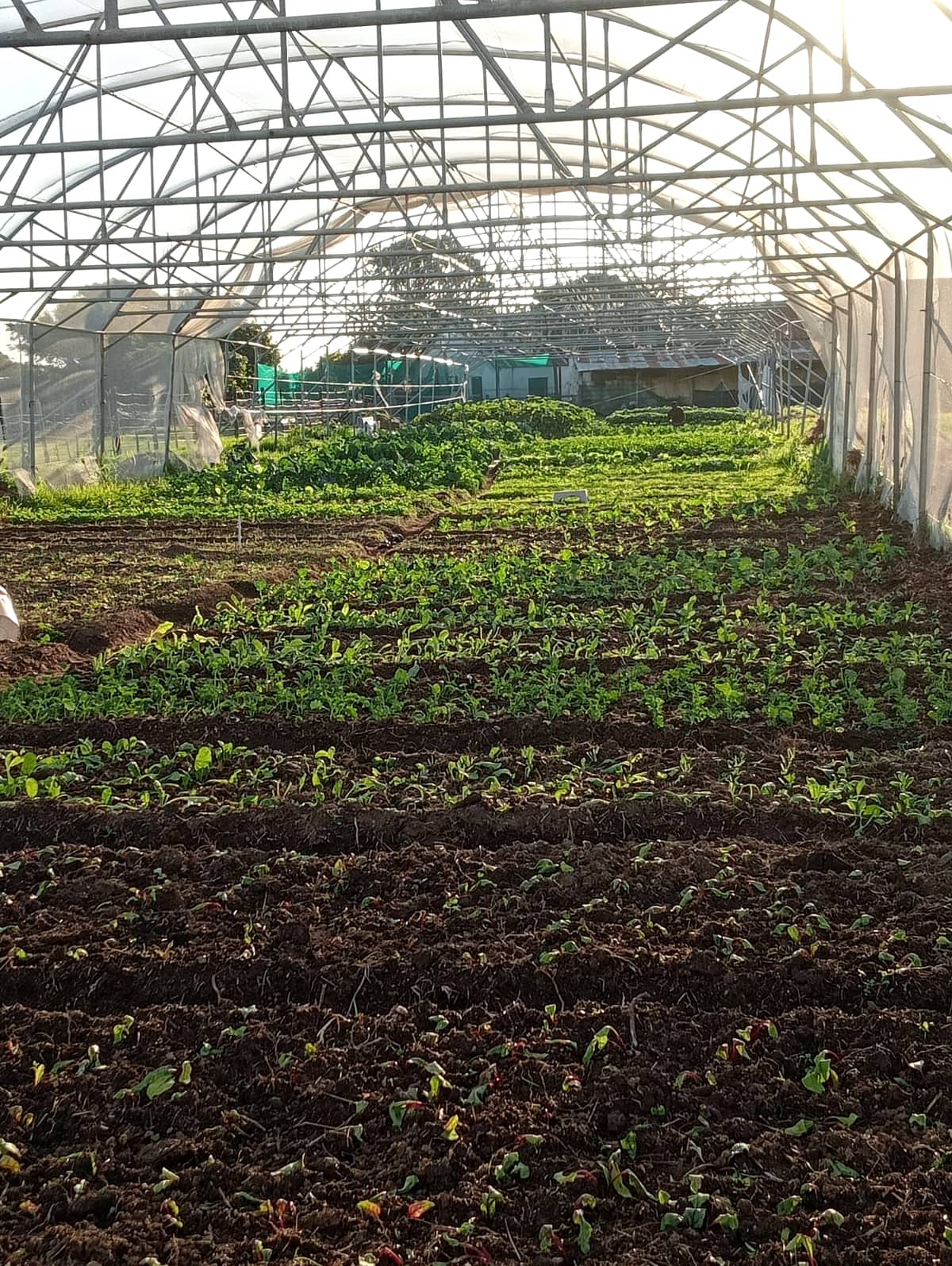
Then we plant into the bed the day it is clear. As soon as a crop comes out, the next goes in. We do not leave a gap and we do not leave a bare patch, because a gap is a bed losing moisture and life for no reason. Crop rotation decides what follows what.
And we work with the season rather than against it. A crop forced into the wrong weeks needs more help than the ground can give it, and it rarely tastes of much.
We are not going to give you a recipe with quantities and dates. Soil is local: what our ground in the Overberg needs is not what ground in another district needs, and a formula copied from a book is not much use. What we can tell you is the principle, and the principle does not change.
What we look for before we plant
Before a bed goes in, we look at four things.
Structure. Does the ground break up properly, or does the fork bounce? Compacted ground is the most common problem and the easiest to make worse by working it when it is wet.
Moisture. Not just wet, but wet through. Dry ground under a damp surface is a trap; seedlings come up and then stall.
Life. Worms, insects, the general busyness of soil that has not been sterilised. If a bed looks dead, we treat that as a warning rather than a minor detail.
Weeds. A flush of weeds tells you the ground is fertile and warm enough to grow something. It is also a reminder to deal with them before the crop goes in rather than after.
Only then does the seedling come out of the tray. We raise seedlings in trays first because it gives them a start in a place we can control, then plant them out into beds that have passed the four checks.
What this means for the food you get
A plant grown in living soil tends to have a firmer texture and a fuller flavour. A tomato tastes of tomato rather than of water. Spinach holds up in a pan instead of collapsing into nothing. Carrots come out with sweetness rather than a woody core.
Some of that is variety and some of it is freshness. A good deal of it is the ground. We are not going to dress this up as a health claim, because we are growers and not nutritionists. We will say that food grown this way tastes better, and that people notice.
It also means the produce does not need much done to it in the kitchen. A bunch of chard from a healthy bed does not need a sauce to be worth eating.
We are artists in observation
Soil is not a project you finish. What we have instead of a formula is attention: we walk the beds every day and we look at every plant.
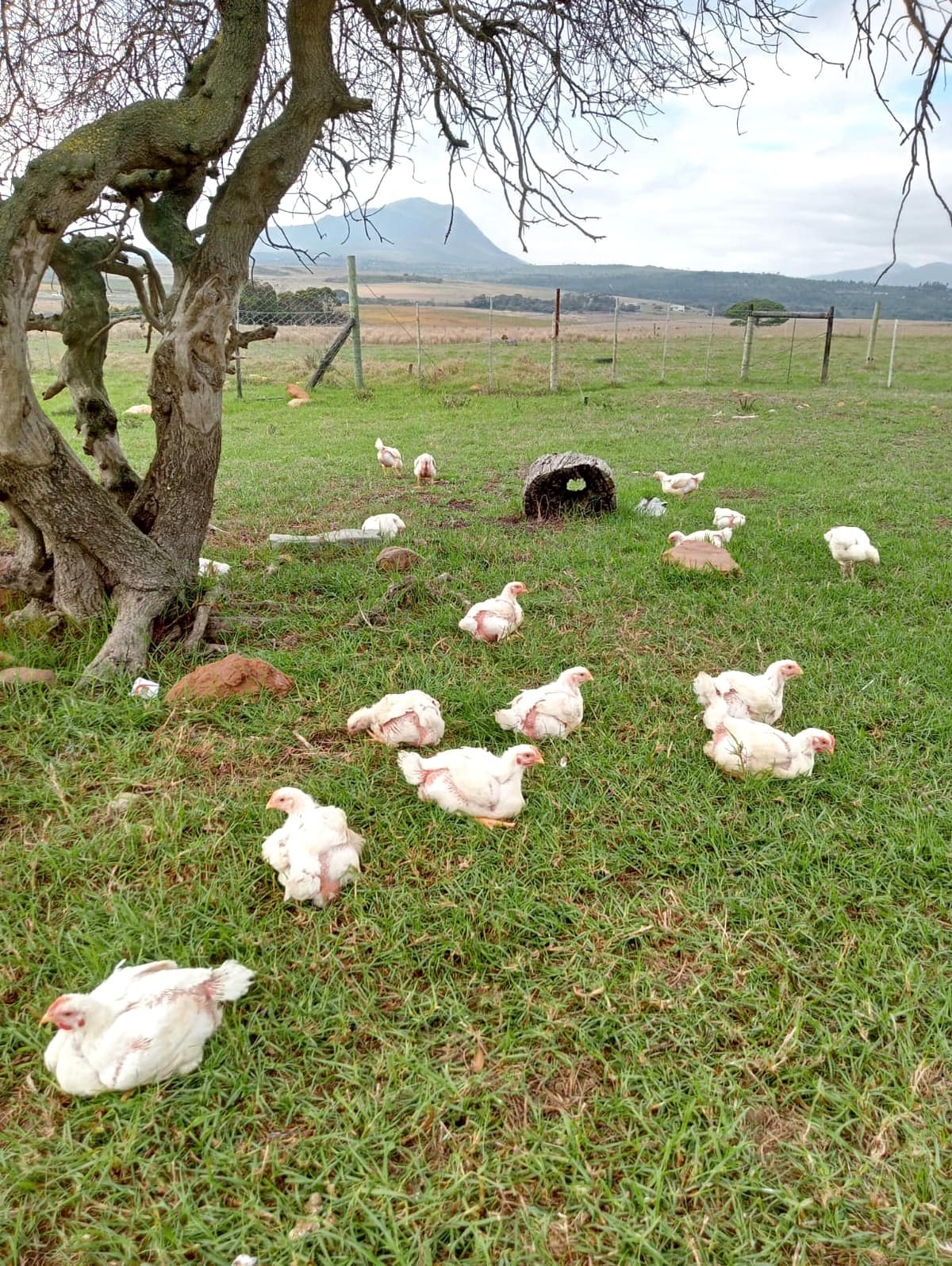
Alex spent 20 years working with people with special needs, many of them without a diagnosis to work from, and 15 years running a home for them in the former Transkei. You learn a person by observing them. A plant is no different. In half a hectare we know every plant by sight: which one is short of water, which one has a mole running under its roots so the roots are hanging in air, which one needs a handful of chicken litter.
That is the method. The compost, the mulch and the rotation are what observation tells us to do. Around 30 years of combined experience mostly teaches you what to look at.
See it in a bed
Photographs of dark soil and seedling trays only go so far. The practical version of this article is a bag of our living soil, or a box of vegetables grown in it.
We grow in gardens across the Overberg and we do not have a farm to visit, so the way to see the method is to buy from it. You can read our story, see what we grow, buy living soil and seedlings, or ask us about a growing consultation at your own place. And if you want the simplest version of all this, order a box and taste it.